Toll Free: +44 7916 691440
Email: support@academicmaster.co.uk
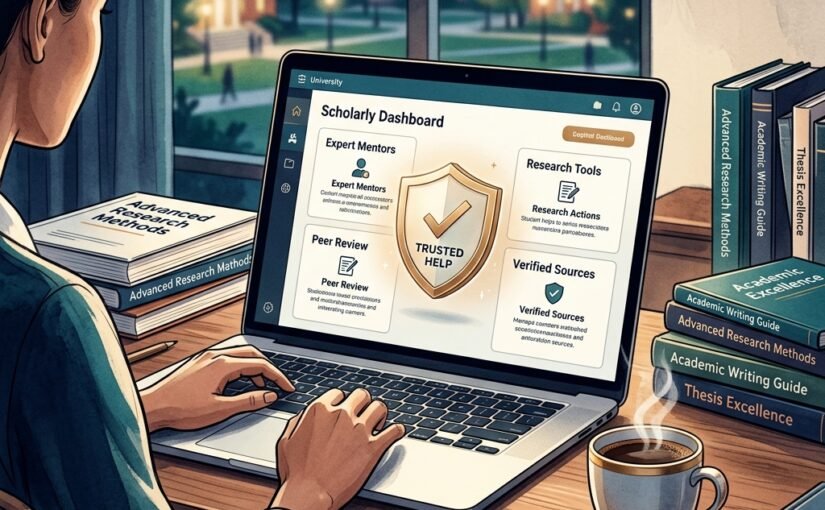
The final stages of a university degree are often a crucible of academic pressure, emotional strain, and logistical challenges. For many students, the dissertation stands as the ultimate academic hurdle, demanding unprecedented levels of research, critical analysis, and meticulous writing. In this high-stakes environment, the allure of professional dissertation help can be incredibly strong. However, navigating the online academic market is fraught with peril. The internet, a vast repository of knowledge and services, is equally a breeding ground for fraudulent agencies poised to exploit stressed, time-poor graduates. The distinction between legitimate, ethical academic support and predatory scams is often subtle, yet critically important for safeguarding your academic integrity, financial resources, and mental well-being.
This comprehensive guide aims to equip you with the advanced knowledge and strategic frameworks necessary to discern genuine, high-quality dissertation assistance from deceptive charlatans. We will meticulously deconstruct the exact methodology required to safely vet any academic agency, providing actionable advice on everything from identifying tell-tale red flags to demanding rigorous verification of academic credentials and understanding robust contractual policies. Our goal is to empower you to make informed decisions, ensuring that any external guidance you seek genuinely enhances your academic journey, rather than jeopardizing it.
The consequences of engaging with an illegitimate academic service extend far beyond mere financial loss. They can be catastrophic, potentially derailing years of hard work and compromising your entire academic future. Students who fail to conduct rigorous background checks often fall victim to heavily advertised but inherently fraudulent “cheap dissertation writing services.” These operations frequently outsource work to unqualified, non-native speakers, or worse, utilize sophisticated software to spin existing content, leading to egregious plagiarism. This isn’t merely a minor academic infraction; it’s a direct threat to your university standing.
Consider the myriad ways an unreliable service can inflict damage:
Ultimately, your academic reputation, your financial investment, and your peace of mind are all on the line. Throughout this guide, we will empower you with the exact strategies used by savvy students to secure premium assistance, while also covering the massive red flags that instantly identify a scam operation. Whether you require a full literature review, complex data analysis, or professional dissertation editing services, the core principles of verification remain identical. By mastering these principles, you will drastically improve your chances of submitting a flawless, original thesis that guarantees a high distinction, free from the shadow of academic fraud.
Unlike standard e-commerce purchases, commissioning academic research is a highly nuanced and sensitive transaction. Therefore, the very first step in protecting yourself is to cultivate a keen eye for the obvious and subtle indicators of an unreliable service. These red flags are often screaming warnings that, when ignored, lead directly to academic and financial distress.
First and foremost, any agency that guarantees a specific grade (such as a guaranteed 80% or a First-Class mark) before even seeing your university marking rubric, your specific research question, or understanding your supervisor’s nuanced expectations, is fundamentally dishonest. Academic grading is inherently subjective, heavily dependent on institutional nuances, individual assessor biases, and the dynamic evolution of research. A legitimate academic support service can guarantee quality, originality, adherence to instructions, and timely delivery, but never a specific final mark. Such guarantees demonstrate either a profound ignorance of how higher education assessment works or, more likely, a calculated attempt to lure students with impossible promises. Reputable services understand that their role is to provide a meticulously crafted, well-researched, and impeccably written piece of work that *maximises* your chances of achieving a high grade, not to dictate the outcome of a complex assessment process.
If an agency claims to offer elite academic writing services, yet its own website is riddled with grammatical errors, spelling mistakes, or awkward phrasing, this is an immediate and critical red flag. The quality of their marketing copy is a direct reflection of the attention to detail and linguistic proficiency you can expect in your dissertation. Furthermore, beyond simple errors, look for overly aggressive sales tactics, hyperbole, or vague, non-committal language that lacks specificity. A professional academic service will communicate clearly, concisely, and with an authoritative tone. They should showcase their expertise through their own communication standards. Beware of generic stock photos that seem irrelevant, broken links, or a poorly designed user interface, all of which suggest a lack of professionalism and investment in their own brand.
For services advertising as “UK-based,” the absence of a verifiable physical UK business address and a Companies House registration number is a serious concern. Legitimate businesses operating in the UK are legally required to be registered and transparent about their corporate identity. This registration offers a layer of consumer protection and accountability. Offshore content mills often operate under false pretenses, using virtual offices or P.O. boxes and masking their true location. Without a traceable legal entity, you have virtually no recourse if things go wrong. Always cross-reference any provided registration numbers with the official UK Companies House database. A genuine UK-based company provides significantly more legal protection and transparency compared to an anonymous online entity.
Typically, the most common trap students fall into is the allure of an impossibly low price. If an agency is offering a 10,000-word Master’s thesis for £200, you must immediately walk away. This isn’t just cheap; it’s mathematically impossible to pay a qualified UK academic a living wage at that price point. Consider the time, expertise, and intellectual labour involved:
A professional academic writer typically commands a rate that reflects their advanced qualifications and experience. Consequently, if the price is too good to be true, your work will almost certainly be outsourced to unqualified individuals, spun through software for plagiarism evasion (often poorly), or blatantly plagiarized from existing sources. Investing in your dissertation is an investment in your future; choose value, not just the lowest price.
While deadlines are often tight, any service promising to deliver a high-quality 15,000-word Master’s thesis in 48 hours is making an impossible claim. High-level academic research and writing require significant time for:
A realistic timeframe for a substantial academic piece (e.g., 10,000-15,000 words) would typically be a minimum of three to four weeks, allowing for dedicated research, writing, and thorough review. Extremely short deadlines often lead to rushed, superficial work or, again, reliance on plagiarised content.
A crucial rule for any legitimate academic service is the provision of a plagiarism report generated by premium software like Turnitin. This report should be provided absolutely free of charge with your final delivery. It serves as definitive proof of the originality of the research. Be wary of services that only offer screenshots of reports, use less reputable (and less accurate) software, or charge extra for this fundamental verification step. Insist on a full, verifiable report that you can independently authenticate. This demonstrates the agency’s commitment to academic integrity and provides you with essential peace of mind.
Once you have bypassed the obvious scams and identified services that appear legitimate, your next critical step is to aggressively verify the credentials of the specific academic who will be handling your project. This is not merely about finding a “writer,” but about securing a subject-matter expert whose qualifications directly align with your research demands. A legitimate service will not hide its writers behind a generic customer service portal; transparency here is paramount.
You must be allowed to review the academic background, previous publications (if applicable), and subject-matter expertise of your assigned writer. This isn’t an unreasonable request; it’s a professional necessity. Key elements to scrutinize include:
Be prepared to ask probing questions about their experience with specific methodologies (e.g., qualitative, quantitative, mixed methods), theoretical frameworks, or statistical software if these are central to your dissertation. A reputable service will facilitate this transparency and even encourage a dialogue about the writer’s suitability.
Before committing to a massive payment, you should absolutely request a brief proposal or outline from the prospective writer. This serves as a vital initial assessment of their understanding and capability. This preliminary document allows you to evaluate:
If they cannot produce a coherent 300-500-word proposal that demonstrates a solid understanding of your project, they certainly cannot write a 10,000-word thesis. This step acts as a low-cost, high-yield diagnostic tool for evaluating a writer’s intellectual capabilities and suitability for your specific project.
Following successful verification, establishing direct communication with your assigned academic is absolutely vital. If an agency strictly prohibits you from speaking directly with your assigned academic, forcing all communication through a generic support email or an intermediary, you must immediately terminate the transaction. Writing a complex thesis is an iterative, highly collaborative process that demands nuanced discussion. You must be able to:
The inability to communicate directly creates a frustrating and inefficient “Chinese whispers” scenario, increasing the risk of misunderstandings and errors. Legitimate services will offer secure, direct communication channels (e.g., internal messaging systems, direct email access) while maintaining your anonymity with the writer.
Even with verified academics and direct communication channels in place, a thorough scrutiny of an agency’s contractual policies regarding revisions and refunds is non-negotiable. These policies are the safety nets that protect your academic outcome and financial investment, particularly given the inherently iterative and subjective nature of academic writing.
A legitimate service will always offer a comprehensive, free revision period after delivery. Academic writing is rarely a one-shot process; your university supervisor will almost inevitably request changes, clarifications, or expansions. A standard revision period typically ranges from 14 to 30 days. What constitutes “comprehensive” is key:
Always insist on a written agreement detailing the scope, duration, and conditions of the free revision period. This clause is a cornerstone of responsible academic support, acknowledging the collaborative nature of dissertation development.
While refunds in this industry are complex due to the nature of custom intellectual property, a reputable agency must have a clear, transparent, and fair arbitration process for situations where the delivered work is objectively unusable or fundamentally flawed. Scrutinize their refund policy for clauses that cover:
Be wary of agencies with “no refund” policies or those that make the refund process overly convoluted and opaque. The policy should be easily accessible, clearly written, and offer practical recourse when legitimate grievances arise. Understand that a full refund for a service partially rendered is rare in custom intellectual work, but robust provisions for objectively verifiable failures are essential.
While ordering a full thesis at once might seem convenient, it is an extremely high-risk strategy, especially with an unfamiliar service. A far superior and safer approach is to demand a “progressive delivery” schedule. This methodology allows you to pay for and receive the work chapter by chapter, or section by section, ensuring continuous oversight and control over your project’s development.
With progressive delivery, you would typically:
This subtle restructuring of the delivery process completely mitigates the risk of receiving a 20,000-word document at the final deadline that is entirely off-topic, based on flawed research, or fundamentally misaligned with your supervisor’s expectations. The benefits are multifaceted:
A service that readily offers and encourages progressive delivery demonstrates confidence in its work and a genuine commitment to client satisfaction and academic success.
In the age of digital marketing, it’s easy for companies to curate an image of perfection on their own websites. Many students make the mistake of relying solely on the glowing testimonials posted directly on an agency’s homepage. While these can offer a glimpse, they are inherently biased and often fabricated or cherry-picked. To truly gauge a service’s reputation, you must look beyond their self-promotion.
The most reliable sources of impartial feedback are independent third-party review platforms. Websites like Trustpilot, Sitejabber, Google Reviews, and industry-specific forums provide a space for real customers to share their experiences. However, even these platforms can be manipulated, so a discerning eye is crucial:
Beyond dedicated review sites, explore academic forums, student groups on social media, or even Reddit threads. While anecdotal, these discussions can offer candid insights and warnings from peers who have used various services. Always cross-reference information from multiple sources to build a holistic picture of an agency’s trustworthiness and quality.
In the realm of academic assistance, maintaining absolute anonymity is not just a preference; it’s a critical safeguard for your university standing. The visual layout of their privacy policy is just as important as their academic credentials. You must ensure the agency prioritizes and explicitly guarantees the confidentiality of your personal data, university affiliation, and payment details.
A reputable academic service will have a comprehensive, transparent, and easily accessible privacy policy that adheres to strict data protection regulations (such as GDPR in the UK and EU). Key elements to scrutinize include:
Beyond the policy, observe their operational practices. Do they ask for unnecessary personal details? Are their payment gateways secure and reputable (e.g., using PCI DSS compliant processors)? True anonymity extends to the writer not knowing your identity, and you not knowing theirs, with the agency acting as a secure intermediary for communication.
A robust system will ensure that the writer only receives the project instructions and necessary academic materials, without any identifying information about you. Conversely, you should only receive the completed work from the writer, without their personal details. This segregation of identities protects both parties and is a hallmark of ethical operation. Inquire about their internal protocols for managing anonymity and data segregation. This diligence is not paranoia; it’s a pragmatic step to protect your academic future from any potential, albeit unlikely, data breach or disclosure that could compromise your university standing.
Navigating the ethical landscape of academic assistance is complex. Here, we address some of the most pressing questions students often have, offering clarity and expert guidance.
This is arguably the most critical and nuanced question. In the UK and most academic institutions globally, submitting work produced by another person as your own original work is unequivocally considered academic misconduct, often leading to severe penalties including expulsion. Legitimate academic agencies operate within a specific ethical framework: they strictly provide these documents as high-level study aids, structural templates, comprehensive research models, and detailed examples to guide *your own independent writing process*. They are designed to help you understand complex concepts, structure arguments effectively, or provide a foundation of research that you then build upon, adapt, and integrate into your own original submission.
The key distinction lies in responsible vs. irresponsible use:
A reputable agency will explicitly state that their services are for research and reference purposes only, and that the final submitted work must be your own original creation. They will often include disclaimers about academic integrity. If an agency encourages you to submit their work directly, that is a massive ethical red flag, indicating they are complicit in academic dishonesty.
This is highly dependent on the availability of the specific academic expert and the complexity, length, and academic level of your project. However, any agency claiming they can write a high-quality 15,000-word Master’s thesis in 48 hours is running a scam. High-level academic research requires significant time for:
For a substantial piece like a Master’s or PhD dissertation, an absolute minimum of three to four weeks should be allowed for a 10,000-15,000 word project, with larger projects requiring several months. Rushed work invariably compromises quality and increases the risk of errors or superficial analysis. Discuss realistic timelines with the agency based on the scope of your specific project.
Beyond the standard revision period, a reputable agency might offer additional post-delivery support, though some services may charge extra for these:
Clarify the scope of post-delivery support during your initial discussions to manage expectations.
Effective communication is paramount for a successful outcome. Always provide clear, detailed, and comprehensive instructions upfront. When communicating with your writer:
Treat your writer as a professional academic collaborator, ensuring mutual respect and clarity in all interactions.
For highly specialized or interdisciplinary topics, verifying the writer’s credentials becomes even more critical. A legitimate agency will have a diverse pool of PhD-qualified academics covering a wide range of disciplines. They should be able to:
Do not settle for a generalist writer if your topic requires deep, specialized knowledge. The ability of the agency to source a truly specialized expert is a strong indicator of its quality and network.
Ultimately, finding reliable academic assistance is not a passive search; it is an active exercise in rigorous vetting, healthy skepticism, and informed decision-making. The investment you make in your dissertation is not just financial; it’s an investment in your academic future, your career prospects, and your personal development. To further bolster your career prospects, you might also consider professional academic cv writing services. Consult Our Career Specialists for tailored advice. Therefore, the process of selecting an agency demands the same level of critical analysis and due diligence that you apply to your academic research.
Before committing your funds and entrusting such a crucial project, always prioritize a direct conversation. Speak to a representative on the phone – ideally, someone knowledgeable about academic writing and your specific field. During this conversation, assess their ability to:
If their responses are hesitant, unknowledgeable, or sound like a script, walk away immediately. Trust your instincts. A legitimate, professional service will exude confidence, transparency, and a deep understanding of the academic landscape.
By presenting your requirements clearly, demanding verifiable academic credentials, insisting on a progressive and transparent workflow, and scrutinizing every aspect of their service offering, you significantly maximize your chances of a successful, stress-free academic partnership. Empower yourself with knowledge, apply rigorous scrutiny, and choose a partner who genuinely aligns with your academic aspirations, ensuring your dissertation is a testament to your hard work and intellectual prowess, not a casualty of online deception. Get Instant UK PhD Support
DISCLAIMER
Academicmaster.co.uk provides custom paper writing/rewriting/research services to help students write their academic papers following their university and college guidlines. These papers can be used as a a source of research and reference guide. For more details contact us how to reference the academic papers properly to avoid any plagiarism accusation.