Toll Free: +44 7916 691440
Email: support@academicmaster.co.uk
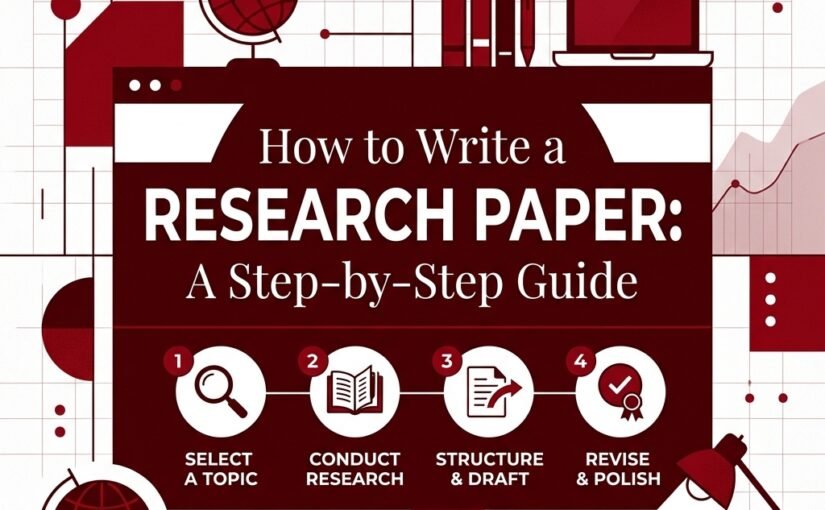
Mastering how to write a research paper is a fundamental academic skill that every university student must develop, yet it remains one of the most common sources of stress. Writing an effective paper is not simply a matter of summarizing facts or compiling quotes from other sources. It is an active intellectual exercise that requires you to analyze arguments, synthesize literature, and present a coherent, evidence-backed thesis statement.
The main challenge students face is the transition from reading source material to drafting their own text. Without a structured workflow, the research process can quickly become overwhelming, leading to disorganized paragraphs, weak arguments, and formatting errors that reduce your final grade.
When you approach your writing systematically, however, the process becomes much more manageable. By breaking the project down into clear, sequential steps, you can create a high-quality paper that meets the rigorous standards of your university.
The foundation of any successful paper is a clear, debatable thesis statement. Before you begin writing or conducting detailed literature searches, you must define the central argument that your paper will support. A common error is choosing a broad, descriptive topic instead of a focused, analytical question that can be argued using academic evidence.
Your thesis statement should appear in your introduction and act as a roadmap for the rest of your paper. It should clearly state your position and outline the key points you will discuss in your analysis chapters. If your thesis is vague or descriptive, your arguments will lack focus and direction.
To help you understand the level of detail required, the table below compares weak, descriptive research questions with strong, analytical thesis statements:
| Weak Topic (Descriptive) | Strong Thesis Statement (Debatable & Focused) |
|---|---|
| How renewable energy is used in the UK to reduce carbon emissions. | While renewable energy adoption has increased, the UK’s reliance on private wind investments limits grid stability, requiring public infrastructure reform to meet carbon-reduction goals. |
| Evaluating the impact of social media on teenage mental health. | Instagram’s image-focused algorithms amplify body image anxiety among adolescent girls, necessitating mandatory social media literacy programs in secondary schools. |
| The history of artificial intelligence in corporate marketing campaigns. | The use of predictive artificial intelligence in target marketing violates consumer privacy standards, requiring the implementation of stricter digital consent frameworks. |
Once you have a clear thesis, the next step is to find and evaluate academic sources. As you research how to write a research paper, you will discover that finding peer-reviewed sources is critical to building credibility. Relying on generic websites or popular articles will reduce the academic weight of your arguments.
Use search databases like Scopus, Google Scholar, and JSTOR to find articles. Focus on identifying the current academic debates, methodology types, and areas where researchers suggest more work is needed. As you read, take detailed notes on the authors’ methodologies, key findings, and theoretical frameworks.
Instead of summarizing each paper individually, conducting a structured dissertation literature review allows you to group your sources by theme. This makes it easier to compare different viewpoints, highlight research gaps, and show how your work connects to the wider academic conversation.
“A research paper is not a list of summaries. It is a dialogue between you and the academic community, where you synthesize existing knowledge to support your own original thesis statement.”
Make sure you keep track of all citation details as you work. Forgetting to record source page numbers or author details early can lead to citation errors, formatting delays, and accidental plagiarism during the drafting stage.
Even high-quality research will fail to convince examiners if it is poorly structured. A clear, logical layout makes your arguments easy to follow and ensures that each section flows naturally into the next. Most academic research papers follow the standard IMRAD structure (Introduction, Methodology, Results, and Discussion), followed by a clear conclusion. For postgraduate research, reviewing a thesis structure masterclass can provide a more comprehensive layout guide.
Your introduction should hook the reader, introduce the background context, and state your thesis clearly. The methodology explains how you gathered and analyzed your data, while the results section presents your findings. In the discussion chapter, you interpret these results, link them back to your thesis, and discuss their implications.
Use the structural checklist below to ensure your draft meets the required layout standards before you begin the writing process:
Research Paper Structure Checklist
Academic Consulting
Our UK academic specialists can help you refine your outline, conduct systematic literature sweeps, and write a flawless, well-referenced research paper.
To ensure your writing is efficient and structured, it is helpful to treat drafting as a sequential workflow. Attempting to write the paper without a clear outline often leads to writer’s block, repetitive arguments, and missed deadlines.
The process below outlines the five essential steps to write, refine, and finalize your academic research paper successfully:
Understanding the academic standards of how to write a research paper requires precise citation formatting. A paper with weak references, missing inline citations, or formatting errors will immediately lose credibility, regardless of the quality of its findings.
Every claim you make that is not common knowledge must be supported by an academic source. Make sure you format your references consistently throughout the document, matching the styling required by your university. Using reference management tools like Mendeley, Zotero, or EndNote can save time and prevent formatting issues.
If you find yourself struggling to format your citations or align your paper structure with academic standards, seeking professional support is often a wise decision. Partnering with the cheap dissertation writing services can help you ensure that your research paper is flawless, structured, and fully compliant with academic integrity guidelines.
Mastering how to write a research paper is a skill that develops over time, requiring patience, research, and revision. Treat the writing process as an investment in your academic success, and proceed systematically through each stage to ensure quality.
By defining a strong thesis statement, conducting systematic literature sweeps, and following a structured writing workflow, you will build a solid foundation for a high-quality paper that meets your university’s highest standards.
Secure your academic success
Do not leave your research grades to chance. Partner with our UK-based academic writers to develop a clear, original, and flawless research paper that meets your university’s highest standards.
DISCLAIMER
Academicmaster.co.uk provides custom paper writing/rewriting/research services to help students write their academic papers following their university and college guidlines. These papers can be used as a a source of research and reference guide. For more details contact us how to reference the academic papers properly to avoid any plagiarism accusation.




Pingback:How to Write a Research Project Proposal: Step-by-Step Guide
Pingback:How to Choose the Right Pathway for Your HSC Work-Based Learning Project